How HOA approval works in California
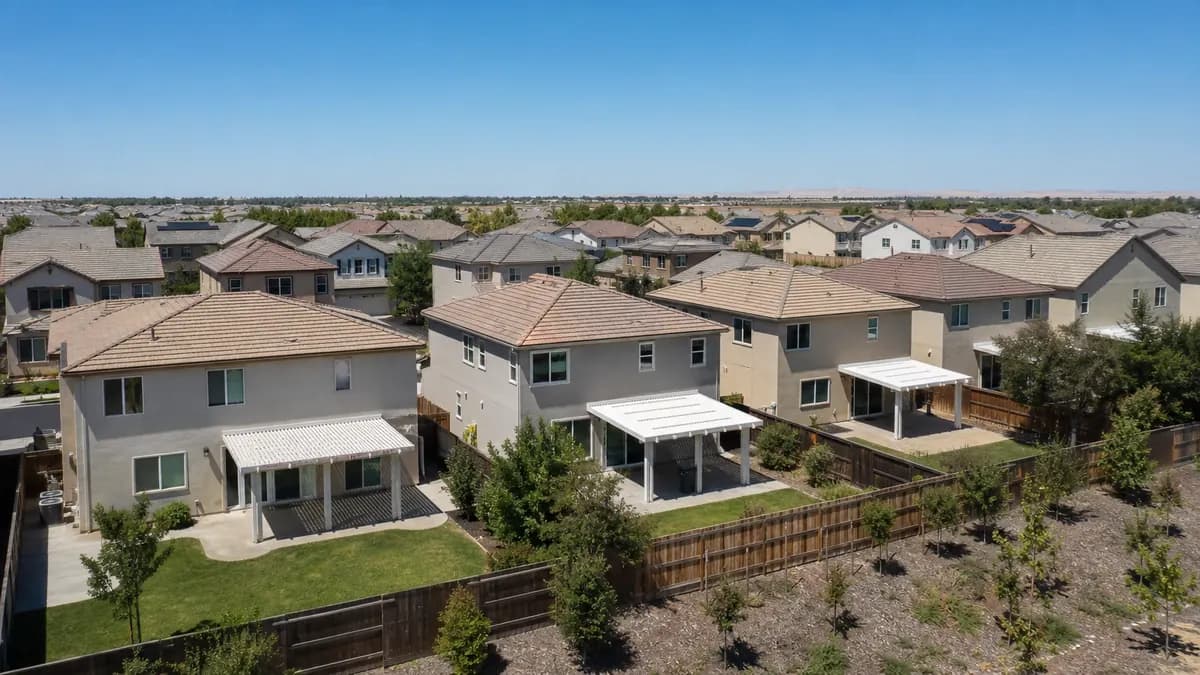
Your association's governing documents, the CC&Rs and architectural guidelines, say whether a patio cover needs approval, and nearly all of them require it for anything attached to the house or visible from common areas. California Civil Code section 4765, part of the Davis-Stirling Common Interest Development Act, sets the ground rules for how the association must respond. Many patio covers in Sacramento neighborhoods fall under these rules.
What Civil Code 4765 requires
- The procedure must be fair, reasonable and expeditious.
- The governing documents must state the maximum time the association has to respond.
- A decision on an architectural application must be in writing and, if it denies the request, explain the reasons, including the governing-document provisions relied on.
- You have a right to reconsideration by the board.
- Decisions must be made in good faith and cannot be unreasonable, arbitrary or capricious.
How long can the HOA take
The statute sets no fixed number of days. Governing documents commonly set 30 to 60 days, so read yours for the actual deadline. Some documents treat silence as approval or denial; check which one applies before you assume.
This page is not legal advice
If you think a denial was arbitrary, a California HOA attorney can advise on your documents. We only connect you with installers.
What to submit to the architectural committee
Committees reject incomplete packets more often than good designs. A typical patio cover application includes the items below, and the installer you are matched with can usually prepare most of them.
| Item | What the committee wants to see |
|---|---|
| Application form | The association's own form, signed by the owner |
| Site plan | Lot lines, house, proposed cover footprint, dimensions and setbacks to property lines |
| Elevation or rendering | Height, roof pitch, beam and post sizes, attachment to the house |
| Materials and colors | Roof panel type, post and beam finish, color chips matched to house trim |
| Product literature | Spec sheet or evaluation report for engineered aluminum systems |
| Contractor information | The installer's name, California license class and proof of insurance |
| Neighbor notice | Signatures or notification if your guidelines require them |
| Photos | Existing yard and house elevation where the cover attaches |
Match the house
Choose posts and beams in a color that matches house trim or fascia. Sand, white and bronze finishes are the most easily approved because they blend with stucco homes.
Keep height and projection modest
Committees commonly limit height below the eave line and flag structures visible over a rear fence or from a shared greenbelt. A cover tied under the existing roofline is easier to approve than a freestanding structure at fence height.
Roof type matters
Some associations accept lattice but object to solid roofs, or allow aluminum but not wood-look finishes. Ask about the guidelines before ordering. Compare options in aluminum patio covers and aluminum versus wood.
HOA approval versus the building permit
They are separate approvals and one does not replace the other. The HOA decides appearance and covenant compliance; the city or county decides structural safety, zoning and code compliance. Most installers get HOA approval first because drawings may change, then submit the permit.
Some places connect the two. The City of Lincoln's patio cover handout tells applicants to obtain HOA approval and have plans stamped by the association before they submit for a permit; this comes from an older version of the handout, so confirm with the city. In El Dorado Hills and Cameron Park, the Community Services District's architectural approval is a county permit prerequisite in architecturally controlled areas, separate from any HOA. The permits guide covers the rest.
Sequence that avoids rework
- Read CC&Rs and architectural guidelines; note limits on height, color, materials and setbacks.
- Get a drawing set and spec sheet from the installer.
- Submit to the architectural committee and record the date.
- Receive a written decision; request reconsideration if denied.
- Submit to the building department with the HOA approval attached if required.
Where HOAs are most common
Newer master-planned areas such as Natomas, Roseville, Rocklin, Elk Grove, El Dorado Hills and Folsom frequently include associations, and 55-plus communities such as Sun City Lincoln Hills have their own architectural controls. We cannot confirm HOA prevalence neighborhood by neighborhood, so check your own documents. Older streets in Carmichael, Fair Oaks and parts of Citrus Heights are less likely to have one.
What to do if you are not sure you have an HOA
Look at your closing documents, your property tax and utility mail for association dues, or ask your title company. The county recorder holds recorded CC&Rs.
If the HOA says no
Ask for the written decision with the reasons and the provisions cited, request reconsideration by the board, and consider a modified design. Switching a solid roof to lattice, shortening the projection or changing the color often resolves it. A pergola or retractable awning sometimes meets guidelines that a solid cover does not.
Timing and next steps
HOA review sits ahead of the permit in the schedule and is often the slowest step you do not control. See the installation timeline guide for how it fits with the rest, and use the contact form to be matched with an installer who regularly prepares architectural submittals.
Back to the main guide: patio covers in Sacramento.