Aluminum versus wood at a glance
| Factor | Aluminum | Wood |
|---|---|---|
| Typical installed cost | $20-$50 per sq ft solid; $30-$60 insulated | $20-$40 per sq ft open lattice; roughly $35-$120 solid roof |
| Maintenance | Occasional rinse; finish is baked on | Stain or seal every 1-3 years |
| Typical lifespan | 25-30+ years (installer-reported) | 15-20 years with upkeep (installer-reported) |
| Termites and rot | Immune | Vulnerable if neglected |
| Fire | Noncombustible | Combustible; matters in foothill fire areas |
| Insulated option | Yes, foam-core panels | Not in the same sense; relies on shade and roofing layers |
| Look | Painted, wood-grain embossed or smooth | Natural grain, exposed beams, stain choice |
| Permit path | ICC-ES/IAPMO report or county standard plan | Standard plan or engineered span tables |
Figures are typical ranges from national cost guides and installer sources, 2025 to 2026, and they vary by size, product and site. The installer's written quote is what counts. For price detail see patio cover cost in Sacramento.
Heat: how each material handles Sacramento summers
Sacramento averages about 23 days a year at or above 100 degrees F, with July highs in the mid-90s, so the roof's job is heat control. A solid wood roof gives dense shade and has some natural thermal mass. A non-insulated aluminum pan or lattice gives shade but conducts heat. An insulated aluminum panel is the strongest option, with 3-, 4- or 6-inch foam-core panels (.024-inch aluminum skins over 1.5 lb EPS) and an R-value around 13.95 for a 3-inch panel according to one vendor. Vendors claim 15-20 degrees F cooler underneath, which is a marketing claim.
Insulated aluminum
If cooling the patio is the goal, see insulated patio covers. Insulated panels also quiet rain noise and give a flat ceiling suited to recessed lights.
Wood and open designs
Open-beam wood with a lattice or slatted roof filters sun rather than blocking it, which many people prefer for a garden feel. Choose a solid roof layer if you want afternoon shade on a west-facing patio.
Maintenance and lifespan
This is where the two diverge most. Aluminum carries a baked-on or embossed finish and generally needs only an occasional hose-down with mild soap. Wood needs staining or sealing every one to three years, and Central Valley sun is hard on neglected finishes. Installer sources put aluminum at 25 to 30 years or more and wood at 15 to 20 years even when well kept, and estimate wood upkeep at a few hundred dollars a year if you hire it out. Those are contractor figures, so use them directionally.
Rot, termites and warping
Aluminum does not rot, split or attract termites. Wood can, particularly where posts meet concrete or where sprinklers hit it. Pressure-treated or naturally durable species such as cedar and redwood help, and flashing and post standoffs matter.
Fire exposure
Aluminum is noncombustible. For foothill homes near El Dorado Hills and Granite Bay, where covered structures face tighter rules (Placer County requires a Class A roof assembly on covered roof structures), ask the installer what roof assembly your site needs.
Structure, spans and what a permit looks at
Both types need a permit when attached, and the rules are in the patio cover permits guide. Aluminum systems usually come with an ICC-ES or IAPMO evaluation report, which the City of Sacramento, Sacramento County, Roseville, Rocklin and Lincoln accept. Sacramento County's GI-38 standard plan covers attached lattice and solid covers.
Wood covers are checked against span tables. The City of Sacramento asks plans to state lumber species and grade, checked against California Residential Code Chapters 6 and 8, and a typical callout in a nearby city's handout is 2x10 Douglas fir #2 rafters at 16 inches on center. Elk Grove offers a prequalified conventionally built wood-frame handout that works as a standard plan.
Snow country in the foothills
El Dorado County treats the whole county as snow country, with a minimum roof snow load of 20 psf. Wood framing can be sized for that, and engineered aluminum systems list their allowable loads in the report, so check yours against the site.
Appearance and fit with your home
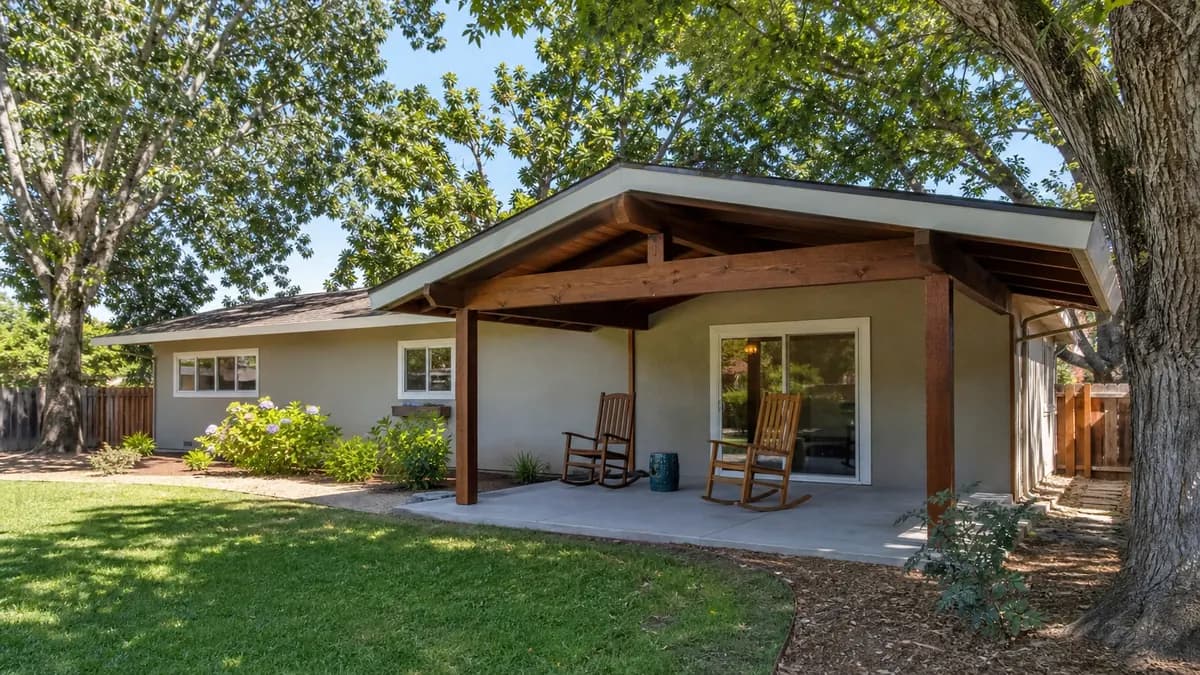
Solid wood with exposed beams suits mid-century and ranch homes, like the 1960s ranches around Carmichael and Fair Oaks. Aluminum in a color-matched finish suits newer stucco tract homes in Elk Grove, Natomas and Roseville, and wood-grain embossing gives aluminum a stained look without the upkeep. HOAs often spell out acceptable colors and materials, so read patio cover HOA approval before choosing.
Colors and finishes
Aluminum comes in a set palette of baked-on colors and embossed grains. Wood can be stained or painted to match trim, and it can be restained later to change the look.
Which should you choose?
- Choose insulated aluminum if you want the coolest, lowest-maintenance space for summer use.
- Choose solid or lattice aluminum for a budget-friendly, permit-friendly cover.
- Choose wood if the natural look or an architectural match matters to you and you are willing to keep up the finish.
- Consider a hybrid, such as an aluminum roof with wood-look posts or beams.
See aluminum patio covers and wood patio covers for each option, or browse patio covers in Sacramento to be matched with an installer.
Related questions homeowners ask
Is aluminum or wood better for resale?
A permitted, well-kept cover of either type adds usable space. Buyers tend to notice peeling stain and rot more than the material choice, so low maintenance helps.
What about louvered or metal options?
If you want adjustable shade rather than a fixed roof, compare louvered versus solid patio covers.
Back to the main guide: patio covers in Sacramento.