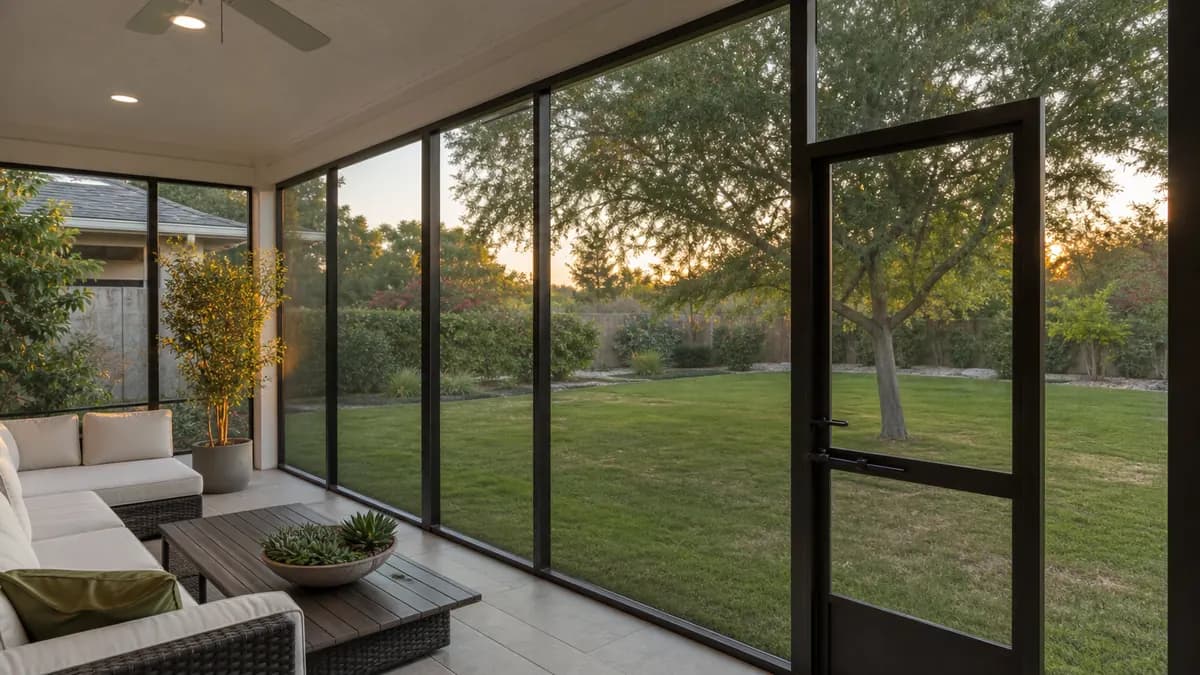
What a Screened Enclosure Is
A screen enclosure is a framed aluminum structure with screen panels in the walls, usually built under an existing patio cover or with its own roof. It keeps out insects, leaves and debris, adds some wind and privacy buffering, and does not seal out weather. It is a lighter structure than a sunroom and is not meant to be heated or cooled.
Screening an existing cover
If your patio already has a sound aluminum patio cover or wood cover, the installer can frame screen walls between the posts. The existing posts, beams and footings have to support the added wind load on the screen walls, so the installer checks the structure first.
A new cover plus screen walls
A new screen room combines a roof (solid, lattice or insulated) with screen walls on three or four sides. Building both together lets one engineered or listed design cover roof and walls.
Frames, Screen and Doors
Frame
Frames are extruded aluminum, usually powder-coated or anodized in white, bronze or sand tones to match the house trim. Chair-rail or kick-panel designs add a solid lower section for strength and to keep pets and balls from tearing the screen.
Screen mesh options
- Fiberglass mesh: the standard, in a common 18x14 weave; inexpensive and easy to replace.
- Aluminum mesh: a stiffer screen that resists sagging and some pets.
- Pet-resistant vinyl-coated polyester: thicker strands, more tear-resistant, a little less see-through.
- Solar screen: a tighter weave that cuts sun and heat from west-facing walls, at the cost of some view and airflow.
Doors and hardware
A hinged screen door with a closer and latch is standard. Wide sliding or French-style screen doors suit larger openings. Ask whether the door sits on a threshold that works with your slab and any step.
Cost Ranges
Cost depends on whether you are screening an existing structure or building a new one. Screen panels on an existing structure are often cited in the range of $500 to $4,000. That figure covers only the screening, not a new framed cover, so treat it with caution. A new framed enclosure with a roof costs considerably more, in line with the per-square-foot ranges for covers on patio cover cost in Sacramento.
All figures are typical and vary by size, product and site. The installer's written quote is what counts.
Permits and Licensing
Screen enclosures are treated differently from open covers. Sacramento County, Roseville and Rocklin all list patio enclosures as permitted work that goes through plan review. Roseville asks for elevations and egress-window details for enclosed patios, and the city accepts ICC-ES or IAPMO listed covers and enclosures with the evaluation report. A pure screen room may be handled differently from a glass room, so the installer should confirm with your building department before work starts.
On licensing, the CSLB awnings class (C-61/D-03) covers awnings and patio covers but does not include patio enclosures. Installers of enclosures often hold a B general building license or the right specialty license for the scope. Confirm at cslb.ca.gov. For the general process, see patio cover permits in Sacramento County.
Climate and Use in Sacramento
Screens cut bugs, not heat. With about 23 days a year at or above 100F, a screen room still needs a solid or insulated roof, a fan and shade on the west wall to stay usable in July. Screens also help in the Delta breeze evenings when insects are active. Solar screen on the west and south walls reduces afternoon sun.
Valley oak and cottonwood debris collects on roofs and screens, and fire-season ash can clog mesh. Rinse the screens with a hose and soft brush at the start and end of summer.
Screen Room vs. Sunroom vs. Open Cover
- Open [patio cover](/aluminum-patio-covers): shade and rain protection; no bug protection.
- Screen enclosure: shade, bugs and debris kept out; open to air, not conditioned.
- [Sunroom](/sunrooms): glass walls, a room-like space, higher cost and more permit work.
If you are unsure which fits, describe the patio on the contact form and the installer you are matched with can walk through the options on site.
Maintenance and Repairs
Screens tear from pets, hail and branches, and the fix is re-splining the panel. Frames are low maintenance; check fasteners and door closers once a year. Sun-faded or loose screens can be replaced panel by panel.
Back to the main guide: patio covers in Sacramento.