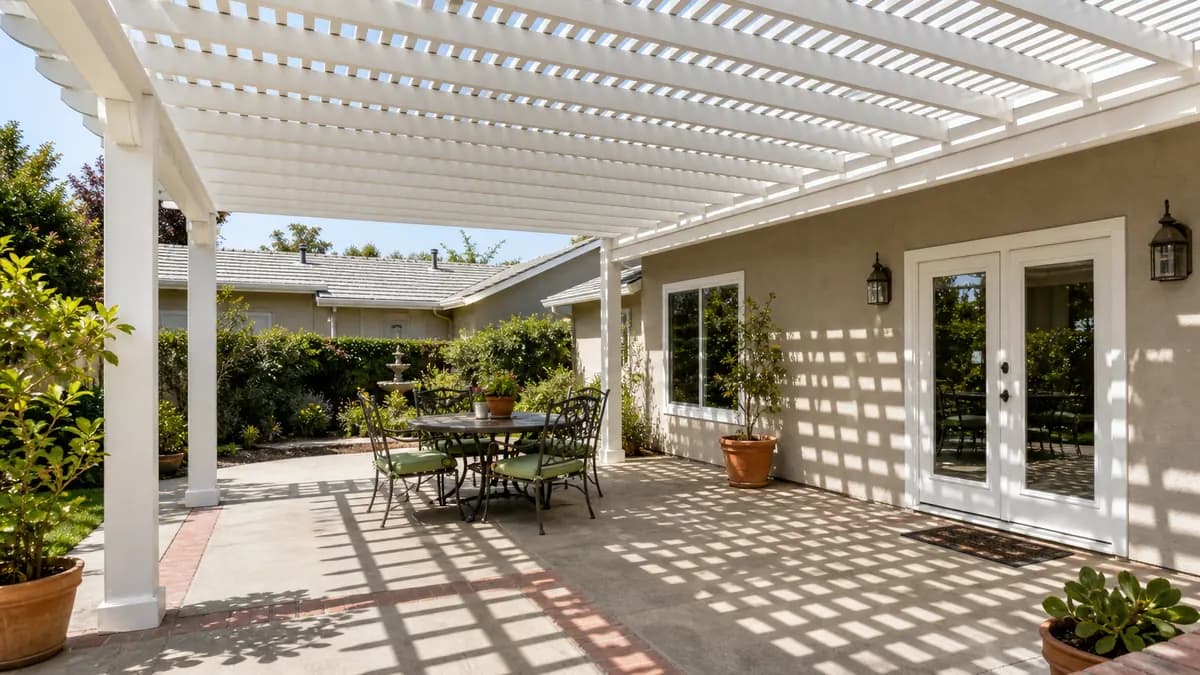
Zoning rules that shape the design
West Sacramento's zoning chapter (17.22) sets limits that matter before permitting begins.
- Covered patios must be unenclosed on 3 sides.
- A patio projection may be no closer than 10 ft to the rear property line.
- Covered patios count toward lot coverage.
On a typical shallow lot, a 10 ft rear setback plus the house leaves little room, so the projection depth is often the first thing an installer measures. Full enclosures, like glass rooms, are a different conversation: see sunrooms and expect to check the city's lot coverage and setback limits.
Permits through the Building Division
Permits are issued by the Community Development Department, Building Division, at 1110 West Capitol Ave., 2nd floor. Patio covers, open or enclosed, require a permit, and attached structures of any size, including arbors and pergolas, are not exempt.
Whether the division accepts ICC-ES or IAPMO evaluation reports for engineered aluminum covers should be confirmed with the division or your installer. The permit guide outlines the usual documents: a site plan, structural details and framing information.
Neighborhoods and what fits
West Sacramento mixes old river districts with a large block of newer construction, and each wants something different.
Southport: newer tracts and larger lots
Southport is where most new construction has gone, with some larger lots and farm-style parcels nearby. Two-story stucco homes in newer tracts do well with insulated aluminum or an adjustable louvered pergola, usually under an HOA review.
Broderick, Washington and Pioneer Bluff: older, near the river
Older housing in Broderick and Washington includes modest mid-century homes and bungalows with narrow yards. Slim attached lattice or a retractable awning fits when the 10 ft rear setback leaves little depth.
Bridge District: townhomes and condos
Riverfront townhomes and condos have shared walls and association rules; balcony or patio shade is often limited to umbrellas, awnings or approved sails. Check association rules first.
Heat and river-valley conditions
West Sacramento sits on flat delta-influenced ground along the river. Average July highs are in the mid-90s and the region sees about 23 days a year at or above 100F, with 2024 well above that. Evenings can cool when the delta breeze arrives.
Open or louvered designs ventilate better than heavily enclosed ones, which also helps meet the three-side unenclosed rule. Insulated panels, commonly 3 to 6 in. with thin aluminum skins over EPS foam, cut radiant heat from solid roofs.
Typical costs
These ranges vary by size, product and site. The installer's written quote is what counts.
| Option | Typical installed range |
|---|---|
| Solid aluminum | $20 to $50 per sq ft |
| Insulated aluminum | $30 to $60 per sq ft |
| Motorized retractable awning | $1,000 to $6,000 |
| Shade sail | $15 to $35 per sq ft, simple installs |
Compare in the cost guide.
Nearby
Across the river, Natomas is in the City of Sacramento with different rules, and Davis is west. See all areas from patio covers in Sacramento.
Back to the main guide: patio covers in Sacramento.